Classify the work before choosing the channel
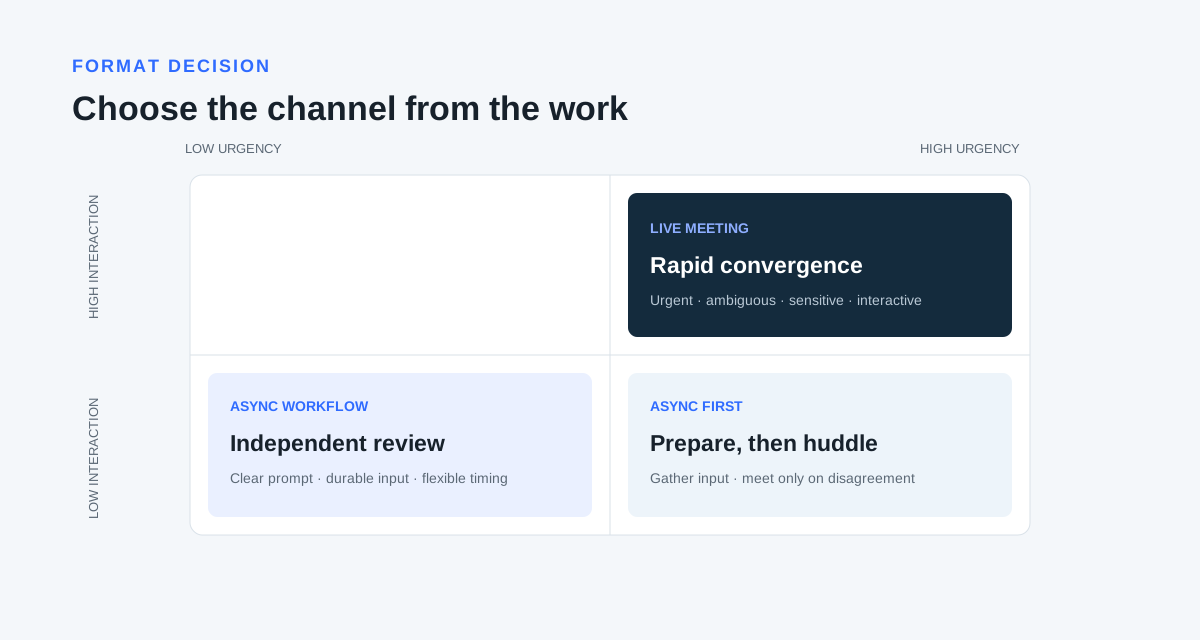
The familiar question—could this meeting have been an email?—is too blunt. A status broadcast and a contested resource decision are different kinds of work. First classify the task as information sharing, feedback, coordination, idea generation, decision-making, or relationship repair.
Information that can be understood independently usually benefits from a durable written format. Work that changes through immediate back-and-forth often benefits from a live conversation.
Test four conditions
Consider urgency, ambiguity, interaction, and consequence. Async is a stronger fit when the deadline allows a response window, the prompt is clear, participants can contribute independently, and a delayed misunderstanding is inexpensive to correct.
- Urgency: must people respond at the same time?
- Ambiguity: can the request and context be written clearly?
- Interaction: do contributions depend on hearing others in real time?
- Consequence: what happens if alignment is incomplete for a day?
Design the async alternative, not just the cancellation
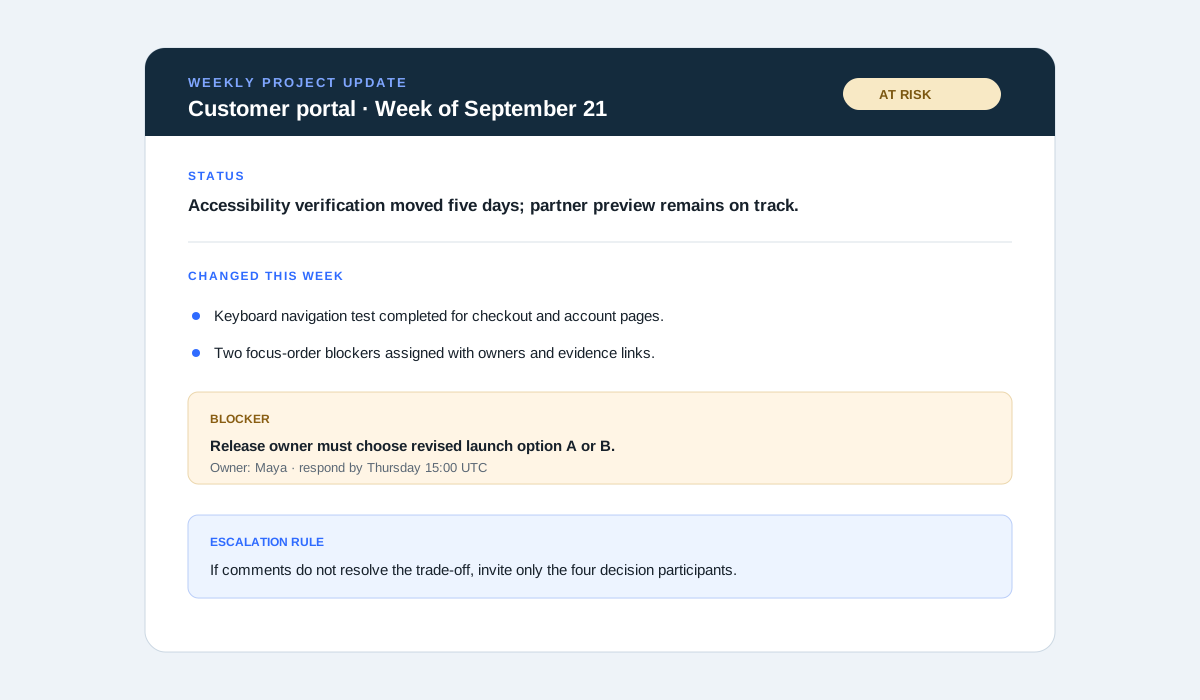
A cancelled meeting without a replacement workflow shifts coordination costs onto participants. Name one owner, link the source material, ask bounded questions, set a response deadline, and state how silence will be interpreted. Keep the final decision and rationale in a stable location.
If written discussion exposes disagreement or confusion, escalate only that portion to a short live session. This creates a smaller meeting with better preparation rather than a larger meeting built around reading slides aloud.