Find the layer where agreement breaks
Teams often repeat positions because they are disagreeing at different layers. One person disputes the forecast, another values speed over reliability, and a third believes the group lacks authority. Asking for more debate about option A or B will not resolve those underlying differences.
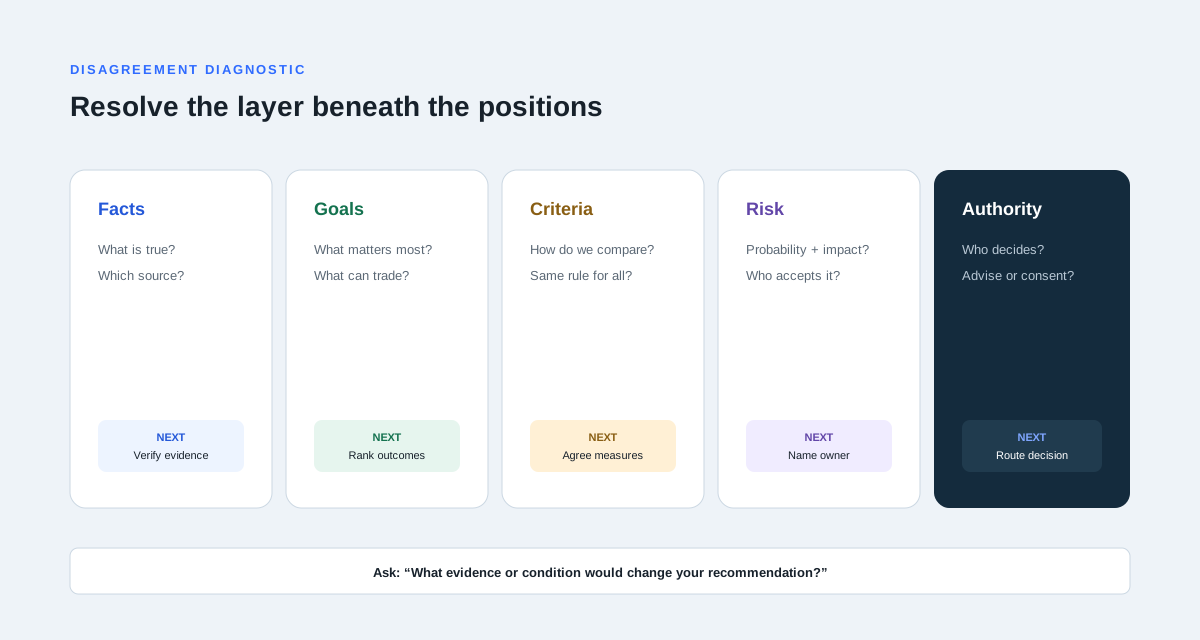
Ask each participant to state the evidence or condition that would change their recommendation. Then classify the disagreement as facts, assumptions, goals, criteria, options, risk tolerance, or authority. More than one layer may be active.
Reconfirm the decision contract
State the decision question, owner, deadline, participant role, and what happens if agreement is not reached. Clarify whether the group advises, consents, or decides. A meeting becomes political when participants believe they share decision authority but the organizer expects only advice.
- Facts dispute: identify the source, method, and evidence owner
- Goals dispute: rank the outcomes the decision is meant to protect
- Criteria dispute: agree how options will be evaluated
- Risk dispute: state probability, impact, reversibility, and risk owner
- Authority dispute: move the choice to the accountable decision owner
Resolve only what the deadline requires
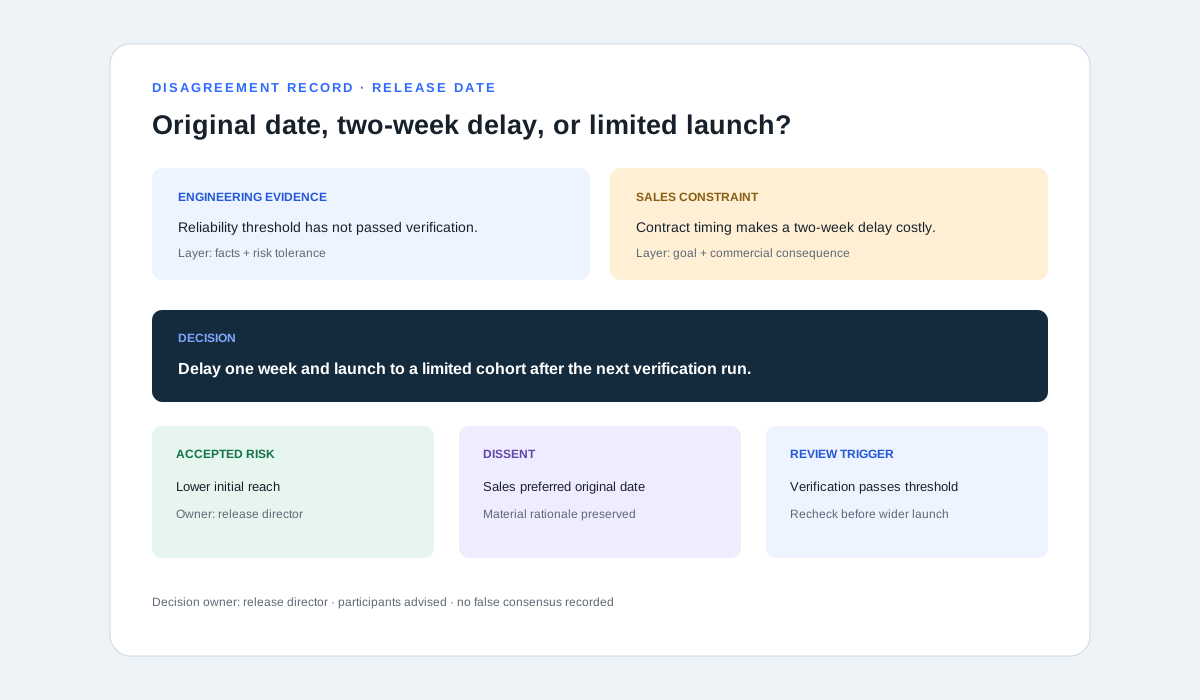
Not every uncertainty needs to disappear. Identify which disagreement changes the current choice and which can become a follow-up test or review trigger. Prefer reversible trials when evidence is weak and delay has real cost. Prefer more evidence when the decision is hard to reverse and the uncertainty could materially change the outcome.
Use the same criteria for every credible option, including the status quo. Do not introduce a weak alternative merely to make one recommendation appear inevitable.
Close without pretending everyone agrees
The decision owner should state the choice, decisive rationale, accepted risks, dissent that remains material, and the condition that would cause review. Participants can support execution while the record preserves that they recommended another option.
If authority or essential evidence is missing, do not label the session a decision. Record what is unresolved, assign an owner and deadline, and schedule the smallest next interaction needed to close it.