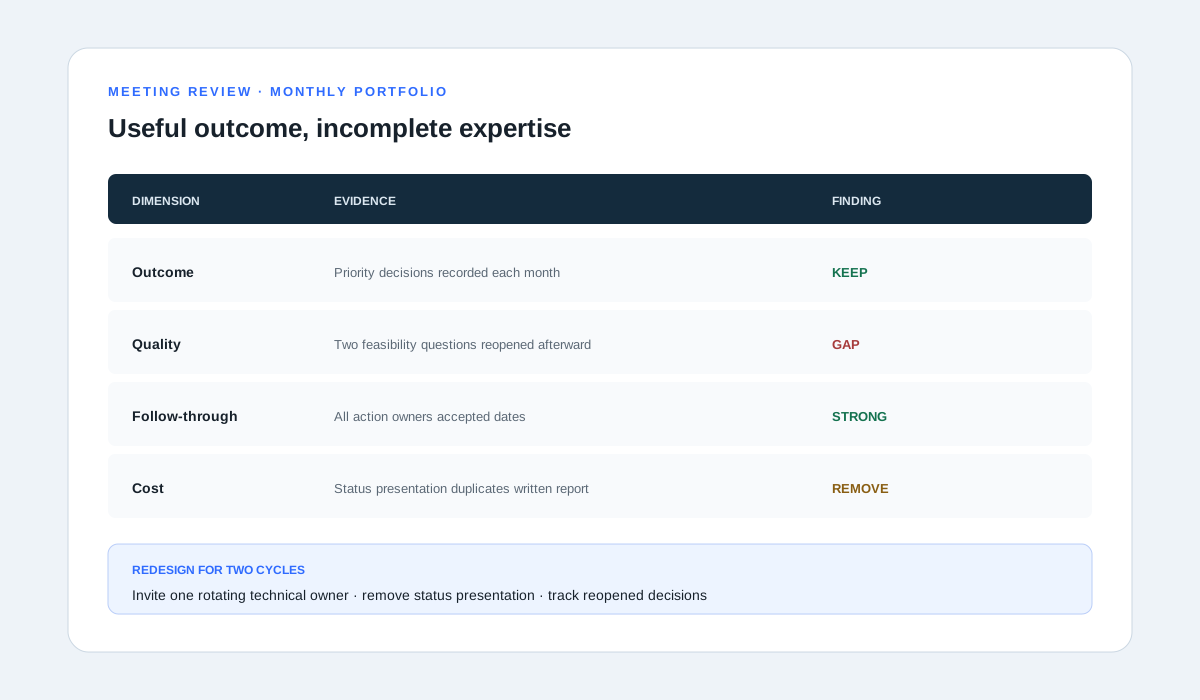
Evaluate against the stated purpose
A meeting cannot be judged fairly when its purpose was never explicit. Start with the promised output: a decision, resolved dependency, reviewed plan, generated options, relationship repair, or shared understanding. Ask whether that output exists in a form another person can verify.
A comfortable meeting can fail to produce its outcome, while a difficult risk review can be valuable. Satisfaction is useful evidence about the experience but should not replace outcome evidence.
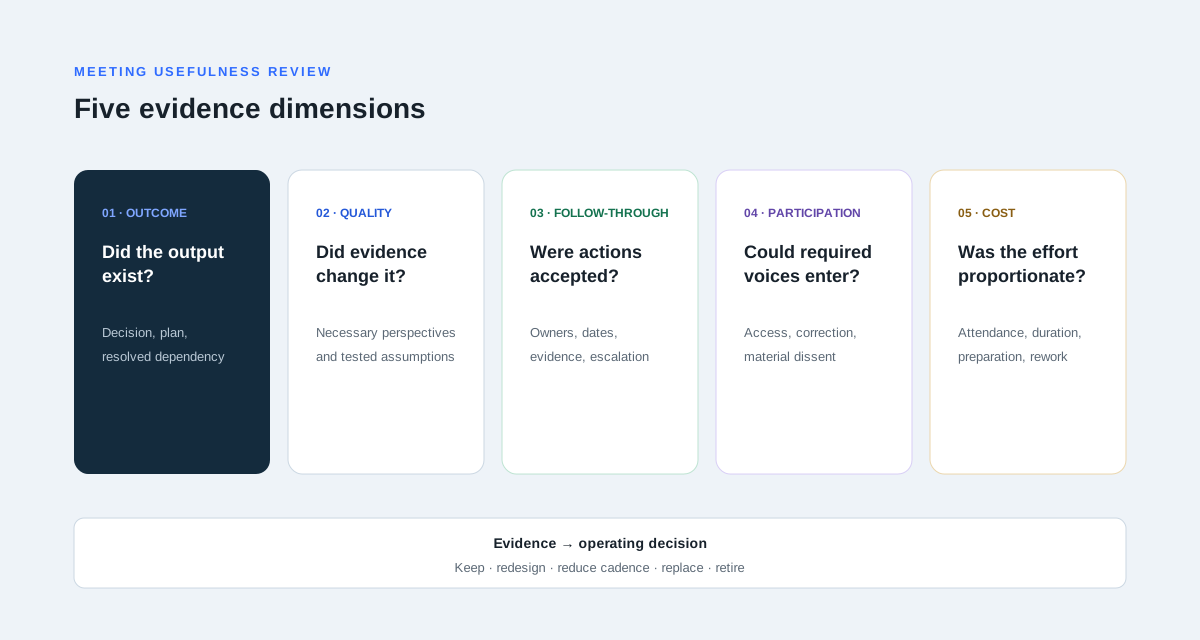
Use five evidence dimensions
Keep the review small enough to repeat. Use observable indicators and plain notes rather than an unexplained composite score. The meeting owner should be able to show why each rating was chosen.
- Outcome: the intended decision, plan, or shared understanding was produced
- Quality: relevant evidence and necessary perspectives affected the result
- Follow-through: owners accepted actions and completed them or escalated blockers
- Participation: required contributors could enter and correct the record
- Cost: participant time and preparation were proportionate to the outcome
Add delayed indicators
Some value appears after participants leave. Review clarification messages, reopened decisions, missed dependencies, action completion, rework, and decision lead time over several cycles. A meeting that ends on time but creates repeated private explanation is exporting its cost.
Compare a redesigned meeting with its previous format or a realistic async alternative. Avoid claiming cash savings when the change only returns planning capacity.
Turn the review into an operating decision
Choose among keep, redesign, reduce cadence, replace, and retire. Name the specific change, owner, trial length, and review measure. Do not collect ratings indefinitely without changing the meeting system.
For high-stakes or infrequent meetings, review immediately after the event and again when follow-through becomes visible. For recurring meetings, use a short monthly check and a deeper quarterly audit.