Start with the question the estimate should answer
Meeting-cost calculations become misleading when a precise-looking number is presented without a decision attached. Before entering any data, name the choice: shorten a weekly review, reduce attendance, change the cadence, or replace a status meeting with a written update.
That choice defines which costs belong in the model. For a quick scheduling decision, direct participant time is usually enough. For a larger process change, preparation, follow-up, contractor fees, travel, and context-switching may also matter.
Use a simple, auditable formula
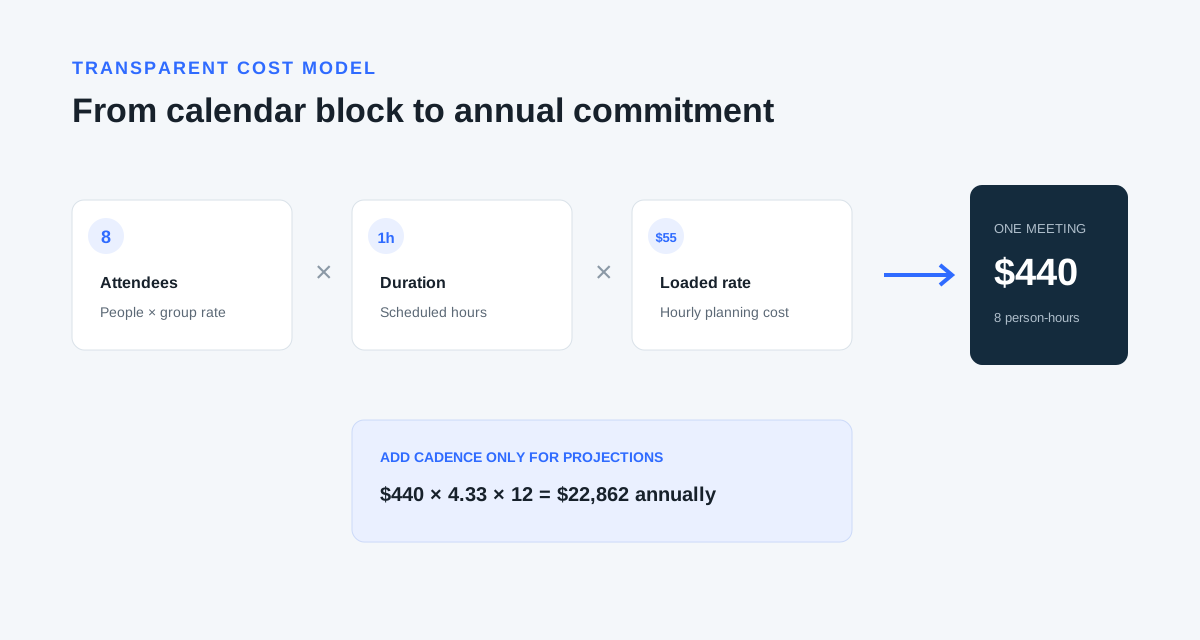
For each attendee group, multiply the number of people by the meeting duration in hours and the estimated loaded hourly cost. Add the group totals. A monthly estimate multiplies the meeting cost by the average number of occurrences per month.
- One meeting cost = attendees × duration in hours × loaded hourly cost
- Monthly cost = one meeting cost × meetings per month
- Annual cost = one meeting cost × meetings per year
- Person-hours = attendees × duration in hours
Choose compensation inputs without collecting private salaries
Use broad role bands, finance-approved planning rates, or one blended rate for the whole group. Loaded cost may include salary plus employer taxes and benefits. If your organization only has annual salary bands, divide by the paid working hours used by your finance team rather than treating every calendar hour as productive time.
Write the assumption beside the result. A range is often more honest than a single number: run the calculation once with a conservative rate and once with a higher loaded rate.
Interpret the number without devaluing collaboration
An expensive meeting can still be worthwhile if it resolves a consequential decision, prevents rework, or coordinates an incident. A cheap meeting can still be wasteful. Cost is a constraint to make visible, not a score for judging the organizer.
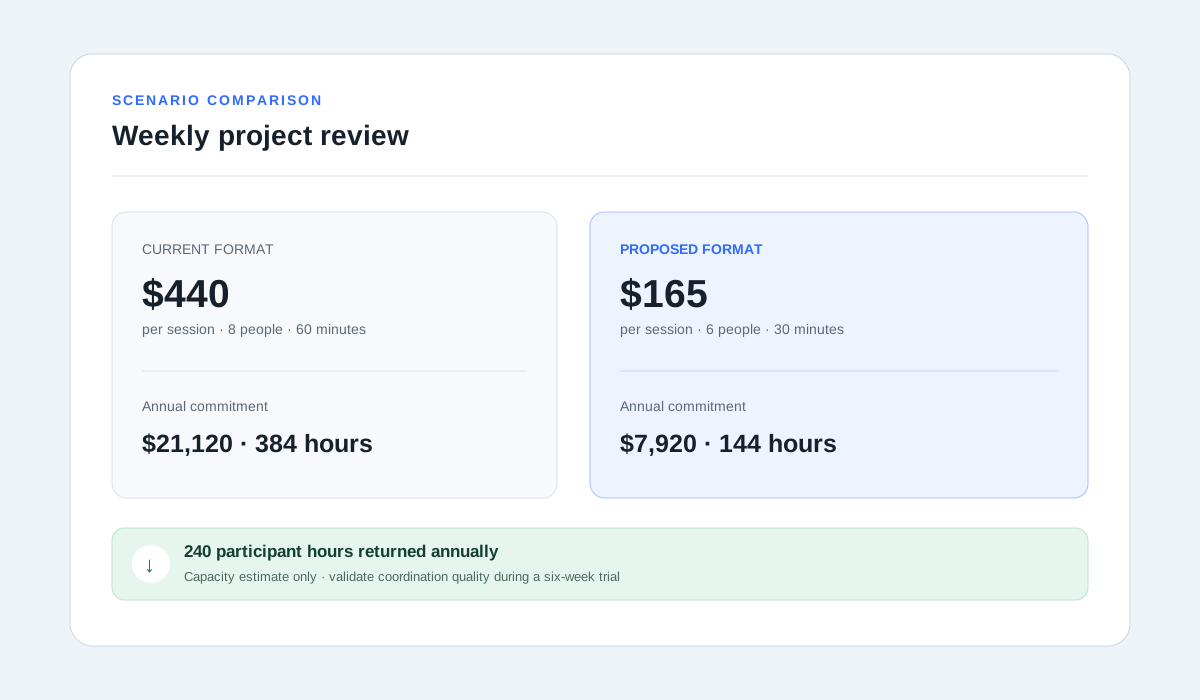
Compare the current format with a credible alternative. For example, model a 60-minute meeting with 12 attendees against a 25-minute decision meeting with six required attendees and an asynchronous summary for everyone else.