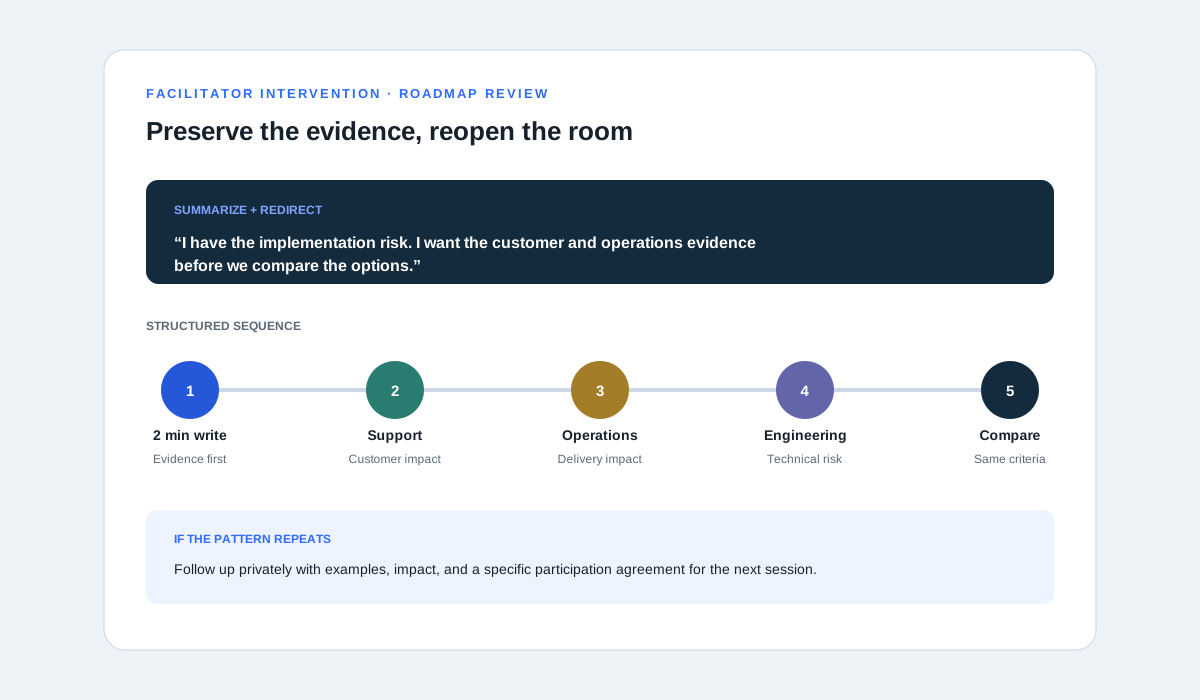
Diagnose what domination is doing to the work
A person may speak often because they hold essential context, because the agenda is unstructured, or because status makes interruption difficult. The operational problem is not airtime by itself. Look for missing perspectives, ideas evaluated before they are understood, remote participants unable to enter, and decisions that reflect one voice without testing evidence.
Avoid labeling someone publicly. The facilitator should describe the pattern and reconnect the room to the outcome: the group needs two additional perspectives before choosing, or the current thread must stop so the decision criteria can be tested.
Change the participation structure
Open discussion rewards people who can enter quickly and repeatedly. Replace part of it with a structure that creates legitimate turns. Gather written reactions before debate, use a visible queue, invite people by relevant expertise, or run a short round in which each required perspective answers the same question.
- Pause and write: give everyone two minutes to record evidence or concerns
- Round by role: hear customer, technical, operational, and risk perspectives
- One response rule: participants speak once before taking a second turn
- Remote first: invite remote participants before the room accelerates
- Parking lot: move important but non-decisive threads out of the current block
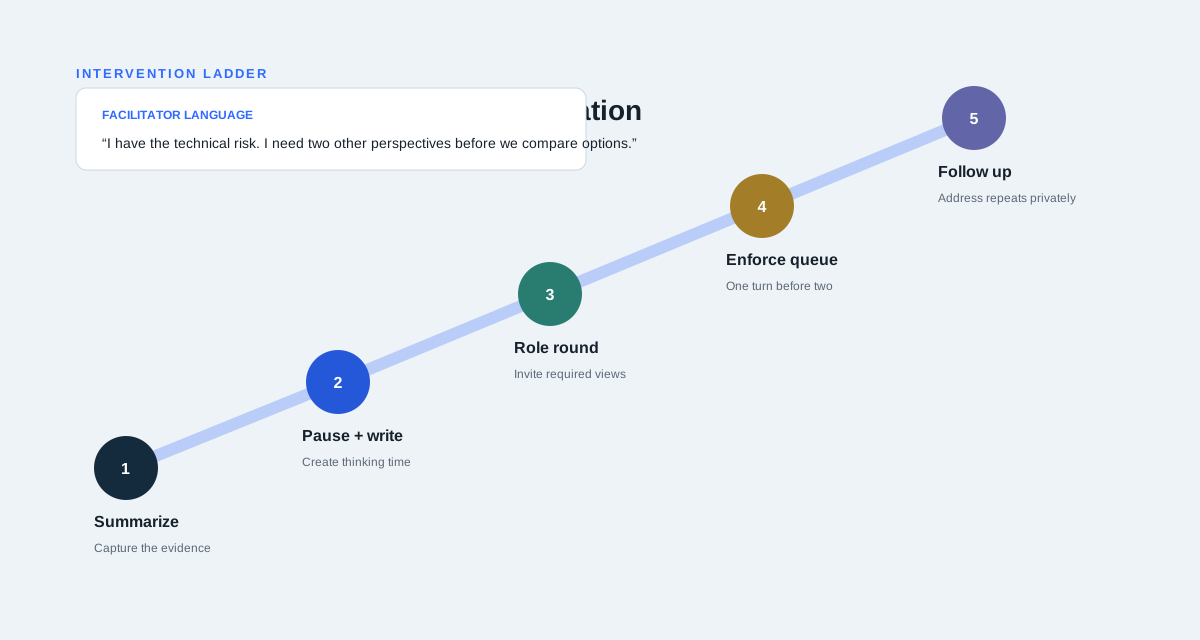
Use a neutral intervention ladder
Begin with the lightest action that protects the meeting. Summarize the contribution and redirect: ‘I have the implementation risk. I want to hear the customer and operations evidence before we compare options.’ If interruption continues, name the process explicitly and enforce the queue or timebox.
When the behavior is repeated across meetings, address it privately with specific examples and impact. Ask what context or role design would help. Facilitation should not require quieter or lower-status participants to confront the pattern themselves.
Check whether participation changed the result
Do not treat equal speaking time as the only goal. Review whether necessary perspectives appeared, whether the group understood disagreement, and whether the final decision recorded the evidence that changed it. Some specialists may appropriately speak more, but their contribution should remain bounded by the objective and open to challenge.
After an important meeting, ask privately whether participants could enter the discussion and whether any withheld evidence changes the decision. Reopen only when the missing input is material.