Identify the coordination job before removing the event
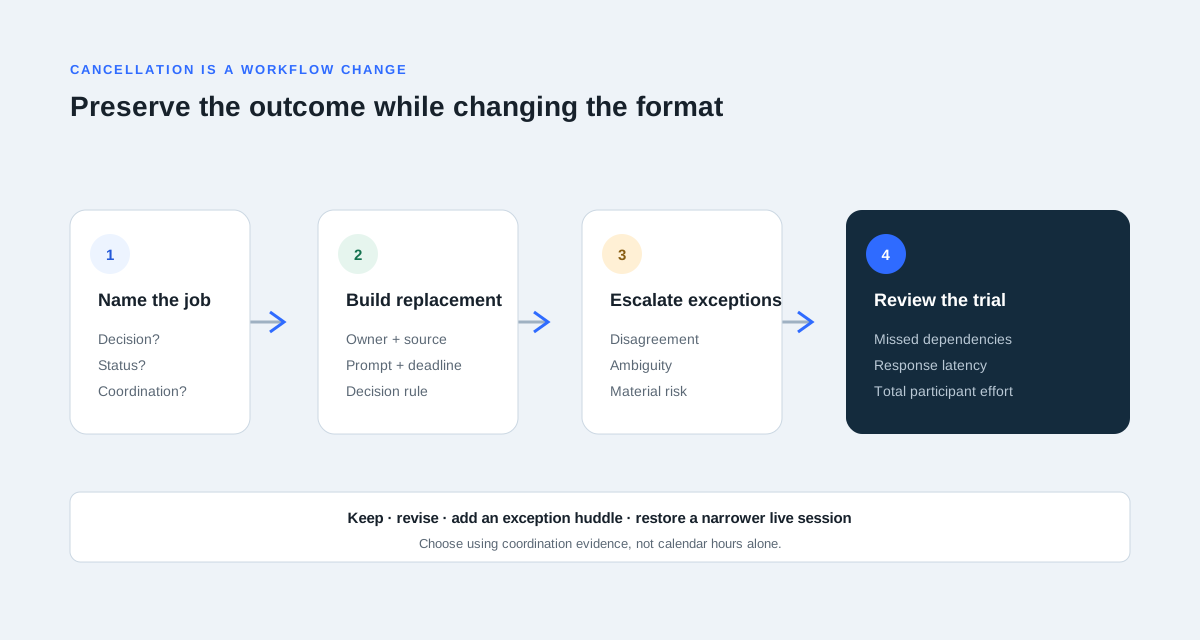
A meeting is often carrying several jobs at once: broadcasting status, collecting feedback, resolving dependencies, making a decision, or maintaining a relationship. Cancelling the invitation without separating those jobs does not remove the work. It distributes the work into private messages, repeated questions, and invisible follow-up.
Write one sentence describing the required outcome and list the people who must contribute, approve, or simply stay informed. If the outcome requires immediate negotiation, sensitive conversation, or rapid shared sense-making, shorten or redesign the meeting instead of forcing the work into a written channel.
Build a complete replacement packet
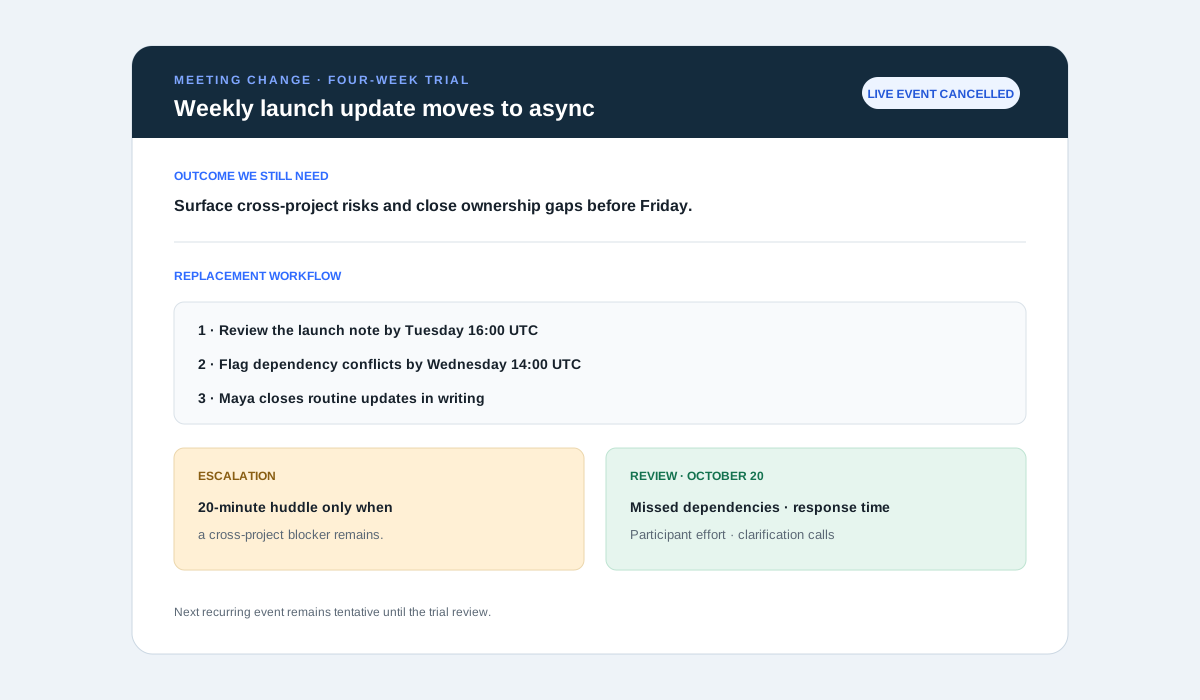
Put the context and request in one stable location. State what changed, what readers need to do, who owns the final decision, and when the response window closes. Link source material directly and keep optional background separate from required reading.
- Outcome: the decision, update, or commitment the workflow must produce
- Owner: one person responsible for closing the loop
- Inputs: one source of truth plus any required evidence
- Response: bounded questions and a specific deadline
- Decision rule: what happens when people agree, disagree, or stay silent
- Escalation: the condition that triggers a short live conversation
Send a cancellation note that stands on its own
Do not send only ‘this meeting is cancelled.’ Participants should be able to act without searching through previous messages. Name the reason for the format change, preserve the original objective, link the replacement workflow, and explain whether the next occurrence remains on the calendar.
Avoid presenting the change as a verdict on the organizer or the people who attended. Frame it as an operating experiment: the team is testing a less burdensome way to produce the same outcome, with a review date and a route back to live discussion if coordination quality falls.
Review coordination quality, not only time saved
Run the replacement for two to six cycles depending on cadence. Track missed dependencies, response latency, duplicated questions, unresolved blockers, decision lead time, and participant effort. Returned calendar time is useful only if the new workflow does not create more rework elsewhere.
At the review date, choose deliberately: keep the async workflow, revise its prompts or deadlines, add a small exception huddle, or restore a live session with narrower attendance and a clearer purpose.