Define local working windows explicitly
List each location, its current UTC offset, and the local window in which meetings are normally acceptable. Do not assume every office works 09:00 to 17:00 or that an open calendar represents consent. Team agreements, caregiving, prayer, commuting, and split schedules may narrow or shift the window.
Treat the window as an operational input, not personal information to debate publicly. Individuals should have a safe way to flag constraints without explaining private circumstances.
Measure burden in minutes outside the window
For each candidate UTC start, translate the full meeting into every location's local time. Count the portion before the local workday starts or after it ends. A meeting from 07:30 to 08:30 creates 60 off-hours minutes for a location whose stated window begins at 09:00—not merely a slightly early start.
Rank candidate times by combined off-hours minutes, then check the maximum imposed on any one location. The lowest total can still be unfair if all inconvenience falls on the smallest office.
Rotate when the map has no humane overlap
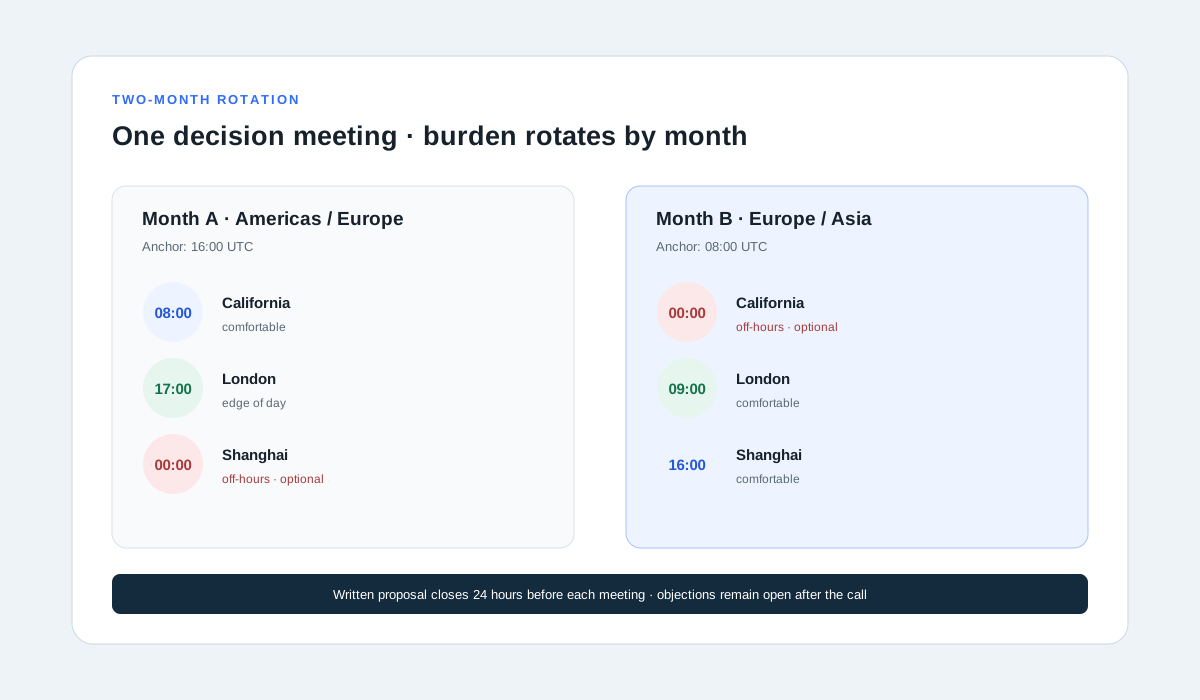
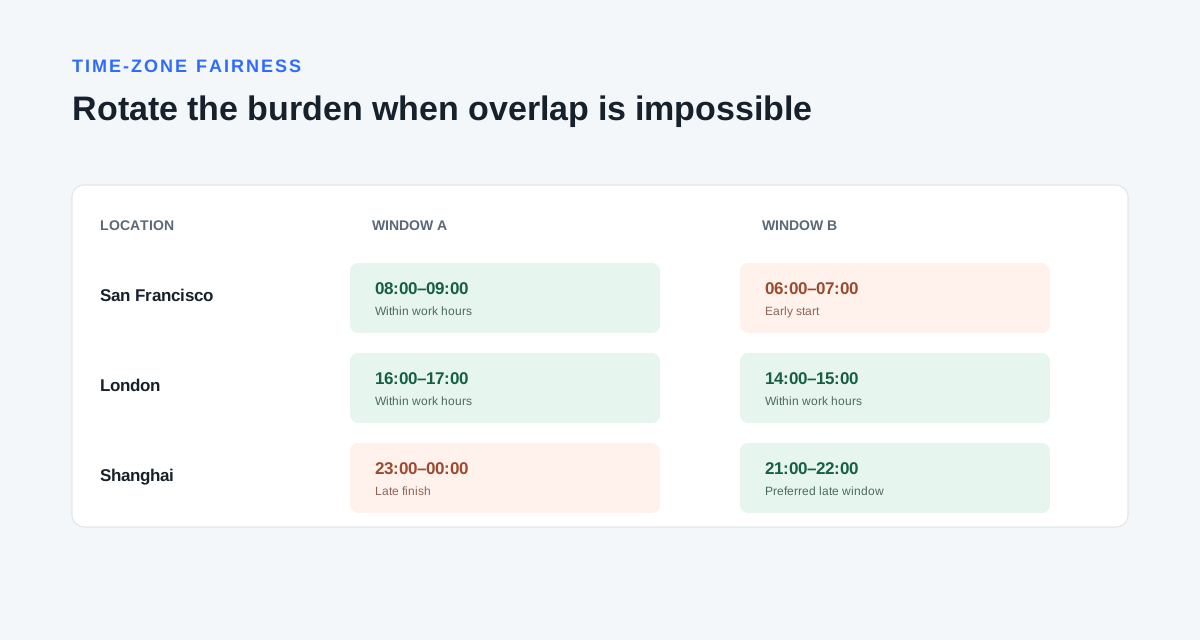
Choose two or three defensible windows and alternate them across the series. Track early starts and late finishes by location over a quarter. A rotation is fairer only if it changes who carries the burden; alternating two times that are both poor for the same office does not solve the problem.
Give participants a way to contribute asynchronously or catch up when a rotated slot is unreasonable. A written pre-read and decision record prevent attendance from becoming the only path to influence.
Recalculate for daylight-saving transitions
Named time zones are governed by local rules, while a fixed UTC offset is only a snapshot. Some locations change clocks on different dates; others do not change at all. A series that is acceptable in September may shift by an hour in November.
Use the planner to compare patterns, then verify the actual invitation date in a calendar that uses named zones. Recheck recurring series near clock changes and when governments revise local rules.